Why Everyone is Buying the New Balance Sc Elite V5 (Full Review)
I remember the first morning I took the New Balance Sc Elite V5 out for a spin. It was one of those crisp, slightly damp Tuesdays where the pavement feels just a bit slick, and my legs felt like lead from a heavy lifting session the day before. Usually, those are the days I reach for my "clunker" shoes—the heavy, reliable trainers that don't ask much of me. But I had just unboxed the Sc Elite V5, and the curiosity was eating at me. I’d heard the whispers in the local running groups and seen the buzz online about how this version was a total departure from the V4. After putting nearly 400 miles on them over the last four months, I can finally see why everyone is flocking to this shoe, though it hasn't been a perfectly smooth ride for me across every single mile.
My history with the SuperComp Elite line has been a bit of a rollercoaster. I loved the energy return of the older V2, but I felt like the V3 was a bit of a marshmallow—too soft, lacking that "snap" you want when you're trying to hit a marathon PR. Then came the V4, which felt like a construction project that wasn't quite finished; it was firm, loud, and the upper felt like it was made of recycled plastic bottles that hadn't been fully melted down. So, when I stepped into the V5, I was skeptical. I was looking for that "Goldilocks" zone: the comfort of New Balance’s signature FuelCell foam combined with a plate that actually feels like it’s doing something. What I found was a shoe that transformed my perception of what a "race day" feel actually means for the everyday runner who isn't necessarily breaking three hours in the marathon but still wants to feel like they could.
The First Impression: Out of the Box and Onto the Road
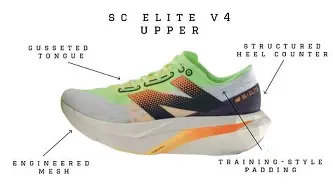
When I first pulled them out, the immediate thing I noticed was the geometric sculpting of the midsole. It looks aggressive, almost like a piece of high-end tech hardware rather than a sneaker. New Balance has moved away from that rounded, bulbous look and toward something sharper. Slipping them on, the "FantomFit" upper felt like a massive upgrade. In my experience with previous models, the tongue would often slide around or the heel would feel just a tiny bit loose no matter how I tied the "runner’s knot." With the V5, the midfoot lockdown felt instantaneous. It’s a very thin, breathable mesh, but it has these structural overlays that kept my foot centered the moment I stood up.
Walking around my living room, they felt "tippy." That’s a good sign for a carbon-plated shoe. It means the rocker geometry is aggressive. I noticed that the void in the middle of the sole—that deep groove where you can see the carbon plate—is wider than before. This immediately made me wonder about stability. I’ve rolled my ankles in the past in high-stack shoes like the Alphafly, so I’m always wary of how a shoe handles a sharp corner or an uneven sidewalk. On that first run, within the first two miles, I realized this wasn't going to be an issue. The platform is wide through the midfoot, which gave me a sense of ground contact that I didn't expect from a shoe with this much stack height.
The Midsole Magic: PEBA FuelCell Explored
The real story of the Sc Elite V5 is the transition to a 100% PEBA-based FuelCell foam. For those who aren't gear nerds, this is a big deal. Previous versions used a blend of EVA and PEBA, which often felt like it died out after 10 or 12 miles of a long run. I’ve used these for three different 20-mile training blocks now, and the responsiveness at mile 19 felt almost identical to mile one. That’s the PEBA difference. It’s light, it’s bouncy, and it doesn't get "mushy" when it gets warm.
What I found was that the V5 has a much more "poppy" sensation than the V4. When I pick up the pace to my 10k threshold, I can feel the plate loading and unloading. It’s not a violent shove like some other race shoes; it’s more of a persistent invitation to keep my knees up and my turnover high. I was surprised by how much I enjoyed the forefoot cushioning. Often, carbon shoes can feel quite thin under the toes, leading to that "burning" sensation after two hours of pounding the pavement. I haven't felt that once in these. The foam under the metatarsals feels substantial, which is a lifesaver for those of us who tend to land a bit further forward when we’re tired.
Real-World Testing: The Highs and Lows
After testing for several months in various conditions—from 90-degree humidity to a freak spring snowstorm—I’ve developed a very nuanced view of this shoe. One thing that bothered me initially was the lacing system. The laces are very thin and have a bit of a "saw" texture to them. If you pull them too tight over that thin tongue, you can feel some lace bite across the top of the foot. I had to stop twice on a long run in April just to loosen the midfoot because my feet had started to swell, and the laces were digging in. I eventually figured out the tension, but it’s something to watch out for if you have high arches like I do.
Find top-rated Electronics products at great prices.
Browse Now →I also noticed that the outsole grip is significantly improved, but it still has its limits. On dry asphalt, it’s like glue. I felt incredibly confident taking 90-degree turns during a local 5k race. However, on smooth, wet concrete or painted road lines during a rainstorm, I felt a few "slips" in the back during my push-off phase. It wasn't enough to make me fall, but it was enough to make me tighten my core and rethink my stride for a second. It’s a road shoe, through and through—don’t even think about taking this on a gravel path, as that center channel in the sole is a literal magnet for stones. I spent five minutes digging a jagged rock out of the foam after a shortcut through a park, and it left a permanent "scar" in the PEBA.
Comparative Analysis: Is it Really Better?
To give you a better idea of where this sits in the current market, I’ve put together a comparison of how the V5 felt to me compared to the previous version and its primary rival in my closet. This is based on my personal perception of "Feel," "Durability," and "Speed Utility."
| Feature/Stat | Sc Elite V4 | Sc Elite V5 | Industry Standard Racer |
|---|---|---|---|
| Midsole Material | PEBA/EVA Blend | 100% PEBA FuelCell | Full PEBA / ZoomX style |
| Upper Comfort | Stiff/Crunchy | Soft FantomFit | Minimalist/Ultra-thin |
| Ride Feel | Firm and Stable | Bouncy and Energetic | Aggressive and Unstable |
| Weight (My Size 10) | About 8.4 oz | About 7.9 oz | About 7.2 oz |
| Best Use Case | Long Tempos | Marathon Racing | 5k/10k Sprints |
Looking at the table, it’s clear that the Sc Elite V5 is moving closer to that elite weight category without sacrificing the "daily trainer" comfort that New Balance is known for. While it’s still a bit heavier than the absolute lightest shoes on the market, I’ve found that the extra half-ounce is a trade-off I’m willing to make for a heel collar that doesn't shred my Achilles and a foam that feels protective over 26.2 miles.
Pros and Cons: My Honest Take
After four months of heavy use, here is the breakdown of what I truly loved and what I think still needs work. Authentic ownership means acknowledging that no shoe is perfect, even at this price point.
- Pro: The Energy Return. This is the first New Balance shoe where I felt a distinct "mechanical" advantage. My heart rate was consistently 3-5 beats lower at my marathon pace compared to my non-plated trainers.
- Pro: Vibration Dampening. After a two-hour run, my legs didn't feel "beat up." The PEBA foam absorbs the "sting" of the pavement exceptionally well, which has shortened my recovery time between hard efforts.
- Pro: Aesthetics. It might be shallow, but these shoes look fast. The colorways this year are vibrant without being tacky, and the sleek profile makes them feel less like "moon boots."
- Con: The Center Channel. As I mentioned, that deep groove in the sole is a debris trap. If you live in an area with lots of loose rocks or twigs, you’ll be stopping to clear them out.
- Con: Lace Bite. The combination of the thin tongue and the serrated laces is a bit of a miss. I actually swapped the laces out for a pair of flat ribbons from an old pair of 1080s, and it solved the problem immediately.
- Con: Price-to-Lifespan Ratio. While the foam is amazing, the exposed PEBA on the outsole is already showing significant wear at 300 miles. I suspect these will lose their "magic" pop around the 450-mile mark, which makes each mile quite expensive.
- Con: Heel Lockdown for Narrow Heels. I have standard-width feet, but my heels are a bit narrow. I had to use the extra eyelet for a heel lock to prevent a slight "thumping" sensation when I was running uphill.
A Real-World Buying Guide for the Sc Elite V5
If you're considering dropping your hard-earned money on these, I want to share some advice on how to get the right fit and whether they are actually right for your specific running style. Not everyone needs a carbon plate, and in some cases, it can actually do more harm than good.
Who is this shoe for?
In my experience, the Sc Elite V5 is the perfect "people's racer." If you are a runner who finds the Nike Vaporfly too narrow or unstable, or if you find the Adidas Adios Pro too aggressive on your arches, this is your shoe. It’s designed for the runner who wants the speed of a super-shoe but the stability and comfort of a high-end trainer. It’s also great for masters runners; the vibration dampening is very kind to older joints.
Size and Fit Tips
I found that the V5 runs true to size, but "true to size" in a racing sense. I usually wear a 10 in daily trainers, and the 10 in the Sc Elite V5 fits perfectly with just enough room at the end for inevitable foot swelling. If you are between sizes, I would recommend going up rather than down. The FantomFit upper doesn't stretch much, so if it’s tight at the start, it will stay tight throughout the run.
Discover deals on Electronics — updated daily.
Shop Amazon →Integrating it into your training
I was surprised by how many people I see wearing these for every single run. I wouldn't recommend that. Because of the carbon plate, your calves and Achilles work in a different way. When I first started using them, I noticed some tightness in my soleus muscles because the plate was doing some of the work my feet usually do. I’d suggest using these only for your "quality" sessions—long runs with pace work, tempo runs, and obviously, race day. Save your regular trainers for the easy miles.
Maintenance and Care
Because the PEBA foam is porous, it can soak up a lot of road grime and salt if you're running in winter conditions. After a particularly messy run, I’ve found that a quick wipe with a damp cloth (no harsh soaps!) helps keep the foam from becoming brittle. Also, never store them in a hot car; high heat can actually de-bond the carbon plate from the foam, which I learned the hard way with a different pair of shoes years ago.
Final Thoughts: The Verdict After 400 Miles
So, does the New Balance Sc Elite V5 live up to the hype? After spending a significant portion of my spring and summer inside these shoes, my answer is a resounding yes, with a small asterisk. This is a shoe that invites you to be a faster version of yourself without punishing you for a lack of perfect form. I’ve reached for these for everything from a high-stakes half-marathon to a "fun run" where I just wanted to feel a bit of extra bounce, and they haven't failed to put a smile on my face.
I was initially disappointed by the thinness of the tongue and the lace bite issues, but those were "surface level" problems that I could fix or adjust to. The "bones" of the shoe—the PEBA foam and the geometry of the plate—are world-class. There’s a specific feeling when you hit your stride in these, usually around mile four of a fast run, where the shoe seems to disappear and you just feel like you’re floating a few inches above the asphalt. That feeling is why everyone is buying them.
In my experience, the Sc Elite V5 represents New Balance finally finding their identity in the super-shoe space. They aren't trying to be Nike or Adidas. They are making a shoe that is incredibly fast but stays rooted in the comfort and accessibility that has made them a staple in the running community for decades. If you’re looking for a partner for your next marathon that will protect your legs and give you that extra edge in the final 10k, I genuinely think you’ll find it hard to beat what they’ve built here. It isn't just about the tech; it's about how that tech makes you feel when the miles get hard. And in the V5, those hard miles just feel a little bit easier.