Should You Upgrade from Bosgame M4 Mini Pc to Expressvpn Aircove?
As home networking and small-form-factor computing continue to blur, buyers often ask whether replacing a mini PC with a dedicated network appliance makes sense. The Bosgame M4 Mini PC and the ExpressVPN Aircove address different needs: the former is a compact general-purpose computer, while the latter is a consumer router with a focus on native VPN protection. This article examines those differences, lays out real-world scenarios where one or the other is a better fit, and helps readers decide whether an “upgrade” from a Bosgame M4 Mini PC to an ExpressVPN Aircove is the right move for their situation.
Overview of the Devices
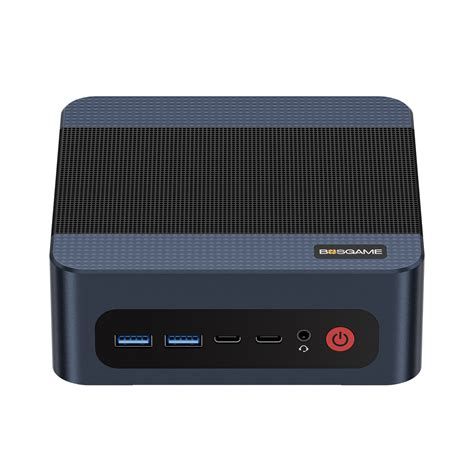
Bosgame M4 Mini PC — What it is
The Bosgame M4 Mini PC is a pocket-sized desktop replacement built around low-power processors. Typical configurations ship with x86-based processors (Intel or AMD alternatives in similar mini PCs), 8–16 GB of RAM, and 128–512 GB of SSD storage. It runs standard desktop operating systems such as Windows or Linux and offers a set of ports suitable for everyday productivity: HDMI/DisplayPort, USB-A/USB-C, Ethernet, and sometimes an M.2 slot for storage expansion.
ExpressVPN Aircove — What it is
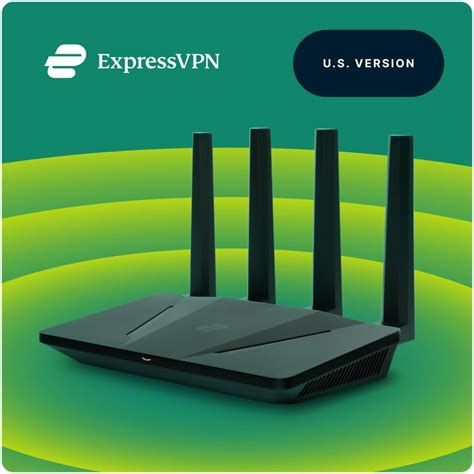
The ExpressVPN Aircove is a consumer Wi-Fi 6 router developed by a VPN provider. Its defining feature is built-in support for ExpressVPN’s service, allowing every device on a home network to be routed through a VPN without individual client apps. It focuses on privacy, simplified VPN setup for whole-home protection, and modern wireless performance, offering dual-band or tri-band Wi‑Fi, multiple Ethernet ports, and firmware designed for easy use by non-experts.
Use Cases: Where Each Device Excels
Understanding typical buyer priorities clarifies the decision. People shopping for mini PCs care about computing power, expandability, and local apps. Router buyers focus on network throughput, device count, ease of securing traffic, and wireless coverage.
When the Bosgame M4 Mini PC is the right choice
- Everyday productivity: web browsing, office suites, email, and video conferencing.
- Light media creation or editing: photo editing, light video editing, and running local development environments.
- Home lab and local servers: running a small NAS instance, media server (Plex/Emby), or light containerized services.
- Dedicated gaming console replacement for indie and less-demanding titles when coupled with a monitor and controller.
- Use cases requiring local storage, local GPUs or direct peripheral connections (USB devices, capture cards).
When the ExpressVPN Aircove is the right choice
- Privacy-first home networks where all devices should benefit from VPN protection (smart TVs, IoT devices, consoles).
- Users who do not want to install VPN clients on each device but want encrypted egress to the internet.
- Homes needing simplified router management and automatic security updates from a single vendor.
- Those prioritizing Wi‑Fi performance and consistent throughput for many simultaneous streaming/gaming clients.
- Small offices or remote workers who need reliable VPN-outbound connectivity for secure remote work.
Detailed Product Analysis
Bosgame M4 Mini PC — Detailed review
The Bosgame M4 Mini PC positions itself as a cost-effective, space-efficient desktop replacement. Its strengths are flexibility and local compute. Capable processors paired with NVMe SSDs mean snappy application launches and quick file access compared to traditional hard drives. Standard OS compatibility allows it to run virtually any desktop software, from office suites to developer tools. Port selection varies between models, but most include at least one gigabit Ethernet port, multiple USB 3.0 ports, and an HDMI output — enough to connect to a home network, external displays, and a variety of peripherals.
For buyers who value local control — running a personal VPN server, hosting a private cloud instance, or using the device as a gateway for specific traffic routing — a mini PC offers deep customization. Linux enthusiasts will appreciate the ability to run custom firewall rules, sniff traffic, or create specialized routing with software like OpenWrt, pfSense (on compatible hardware), or custom scripts. However, using a mini PC as a router or VPN gateway requires networking knowledge and a willingness to manage software updates and security hardening manually.
ExpressVPN Aircove — Detailed review
The ExpressVPN Aircove is marketed for people who want whole-home VPN protection without complex setup. It integrates ExpressVPN client capabilities into a consumer router form factor so that every connected device benefits from the VPN. The hardware is designed for typical home loads: dual-band Wi‑Fi 6, MU-MIMO, and sufficient CPU to handle VPN encryption for multiple clients. The firmware simplifies server selection, split tunneling at the network level, and recurring firmware security updates from the vendor, which reduces the burden on non-technical users.
Aircove’s real-world advantage shows up in families and households with many smart devices — devices that often cannot run native VPN clients. It protects these endpoints by routing their outbound traffic through the chosen VPN server. For privacy-minded buyers, it removes the friction of per-device setup and makes consistent privacy policies across devices easier to implement. The tradeoff is that the Aircove lacks general-purpose computing features: it does not replace a desktop OS or provide local CPU resources for user applications beyond networking tasks.
Discover deals on Laptops & Computers — updated daily.
View Offers →Pros & Cons
Bosgame M4 Mini PC — Pros & Cons
- Pros:
- General-purpose computing: runs desktop OS and standard applications.
- Expandable storage and often straightforward RAM/SSD upgrades.
- Can function as a local server, media center, or specialized gateway if configured.
- Lower latency for locally hosted services and direct access to peripherals.
- Cons:
- Not optimized for whole-home VPN; requires manual configuration to act as a network gateway.
- Potentially higher maintenance burden: OS updates, security patches, and router-level features must be configured by the user.
- Wi‑Fi performance depends on external adapters or the presence of a built-in wireless module; may not match modern router throughput.
- Power usage is higher than a purpose-built router in some configurations.
ExpressVPN Aircove — Pros & Cons
- Pros:
- Native whole-home VPN integration simplifies privacy for every device on the network.
- Optimized for Wi‑Fi coverage and concurrent device handling with Wi‑Fi 6 features.
- Vendor-managed firmware and an emphasis on usability reduce setup friction.
- Designed for privacy-minded users who do not want to manage per-device VPNs.
- Cons:
- Not a replacement for a desktop or mini PC — lacks general-purpose compute capabilities.
- VPN routing at the router level can complicate accessing local network resources if not configured properly (e.g., accessing NAS via VPN endpoint).
- Performance depends on the router’s CPU for encryption; heavy simultaneous VPN traffic can reduce throughput.
- Less flexibility for advanced users who prefer full control over routing policies and custom firmware options.
Side-by-Side Comparison
| Feature | Bosgame M4 Mini PC | ExpressVPN Aircove |
|---|---|---|
| Primary function | Compact desktop / local server | Consumer Wi‑Fi router with built-in VPN |
| Typical CPU | Low-to-mid-power x86 processors | Router-class SoC optimized for networking |
| RAM / Storage | 8–16 GB RAM; SSD storage (expandable) | Limited onboard storage for firmware; not for user files |
| Operating system | Windows or Linux (user-managed) | Proprietary router firmware with ExpressVPN integration |
| VPN capability | User-installed clients or server (manual) | Built-in ExpressVPN client (network-level) |
| Wi‑Fi | Depends on model or external adapter | Wi‑Fi 6, optimized for concurrent clients |
| Ports | Multiple USB, display outputs, Ethernet | Multiple Ethernet LAN/WAN ports, limited USB on some models |
| Ease of use | Requires technical setup for advanced functions | Plug-and-play for VPN and basic network features |
| Best for | Productivity, media servers, local compute tasks | Privacy-conscious households and whole-home VPN |
Practical Scenarios and Decision Guidance
Because the two devices solve different problems, “upgrading” depends entirely on what the buyer needs.
Scenario 1: The remote worker who needs privacy and simplicity
If a buyer primarily wants easy, reliable VPN access for multiple devices (laptops, phones, smart TV) and does not need additional computing power, the ExpressVPN Aircove simplifies configuration and reduces the pain of installing VPN clients on each device. It also protects devices that can’t run VPN software, which is valuable for smart home environments.
Scenario 2: The home media server and local developer
For someone running a home lab, local compilers, development containers, or a Plex server, the Bosgame M4 Mini PC is irreplaceable. It can host local applications and provide the CPU and storage necessary to run services that a router cannot.
Scenario 3: The hobbyist who uses a mini PC as a router
Some advanced users repurpose mini PCs as network gateways, installing firewall/router distributions to take advantage of greater CPU or customizability. In that case, replacing the mini PC with an Aircove might reduce flexibility. The Aircove will provide simpler VPN integration but fewer custom routing options.
Buying Guide: What to Consider Before Switching
When deciding whether to move from a Bosgame M4 Mini PC to an ExpressVPN Aircove (or add the Aircove alongside the mini PC), consider these factors:
1. Primary need: compute or network
Decide whether the priority is local computing (applications, storage, development) or network-level privacy and Wi‑Fi management. If compute is primary, keep the mini PC. If network privacy is the main concern, prioritize a capable router like Aircove.
2. Device count and types
Homes with many IoT devices, smart TVs, and game consoles benefit more from router-level VPN because these endpoints typically cannot run individual VPN clients.
3. Performance expectations
Consider expected throughput. Router-based VPNs are constrained by the router’s CPU for encryption/decryption. If the household relies on multi-gigabit internet or heavy concurrent VPN usage (multiple 4K streams through VPN), verify Aircove’s specs and performance tests or consider a dedicated VPN gateway with higher throughput.
Find top-rated Laptops & Computers products at great prices.
Shop Amazon →4. Technical comfort and maintenance
Mini PC users should be comfortable performing OS updates and network configuration if they intend to use the device for routing or VPN hosting. Aircove reduces maintenance by handling firmware updates and VPN integration but offers less user-level control.
5. Local network complexity
If the home network requires advanced VLAN segmentation, bespoke routing, or specialized firewall rules, a mini PC running a mature router OS may be a better fit. Aircove aims for simplicity rather than enterprise-level customization.
6. Budget and total cost
Factor in the device cost and any recurring VPN subscription. Aircove’s benefits are tied to the ExpressVPN service; ongoing subscription fees may be relevant for long-term cost comparisons versus a self-hosted VPN on a mini PC.
7. Latency-sensitive applications
Gamers and low-latency video callers should consider where encryption and routing occur. Router-level VPN introduces additional hops; in some edge cases, direct client-based VPNs or split tunneling may reduce latency for critical apps.
Combining the Two: Not an Either/Or Situation
For many households, the practical answer is to use both devices. The Bosgame M4 Mini PC can remain the local workstation and media server, while the ExpressVPN Aircove handles network-wide privacy and Wi‑Fi management. This combination preserves local compute capabilities and adds simple, whole-home VPN protection. Key considerations for a combined setup include proper LAN/WAN configuration to avoid double-NAT, understanding split tunneling needs, and ensuring both devices are placed appropriately for thermal and network performance.
Conclusion
Replacing a Bosgame M4 Mini PC with an ExpressVPN Aircove is not a straightforward upgrade because the devices address different needs. The mini PC is valuable for local compute, storage, and advanced customization; the Aircove is designed to protect and manage a household’s network with minimal setup. Buyers should choose based on primary needs: keep or acquire a mini PC when local computing power and flexibility are priorities, choose the Aircove when whole-home VPN protection and simplified networking are the main goals, and consider using both when a household needs both strong local computing and easy network-level privacy. By matching the device to the user’s real-world requirements — productivity, media serving, privacy, ease of use, or advanced routing — buyers can make the most practical decision for their home or small office setup.