Biggest Gmktec Evo T1 Mini Pc Buying Mistakes (And How to Avoid Them)
The Gmktec Evo T1 Mini PC has become a frequent choice for buyers seeking a compact, energy-efficient desktop for home offices, media centers, and light creative work. Its small footprint and competitive price point make it attractive, but that same appeal can lead to costly buying mistakes. This article breaks down the most common errors people make when choosing the Evo T1, explains why they matter in real-world use, and shows how to avoid them. It also provides a concise product analysis, pros and cons, a comparison with nearby competitors, and a practical buying guide so readers can select the right configuration for their needs.
Introduction to the Gmktec Evo T1 Mini PC
The Gmktec Evo T1 Mini PC is one of the latest entries in the ultra-compact desktop market. Intended for users who prioritize space savings and low power consumption, the Evo T1 is often positioned as a turnkey solution for tasks like web browsing, office productivity, media playback, light photo editing, and low-to-moderate multitasking. Typical buyers include remote workers, students, home theater enthusiasts, and small business owners who need a small, unobtrusive machine.
Real-world use cases shape what matters when buying a mini PC: responsiveness when switching between browser tabs and documents, reliable streaming and video playback, sufficient ports for monitors and peripherals, quiet operation, and predictable thermals during sustained workloads. Inadequate attention to these factors is where most buyers go wrong.
Quick Product Analysis
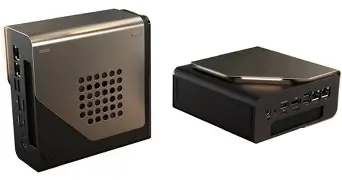
Before listing common mistakes, it helps to understand the Evo T1’s typical hardware and software profile. Variants of the Evo T1 commonly ship with low-power Intel or AMD mobile-class processors, integrated graphics, options for soldered or user-installable RAM and storage, and a selection of I/O ports that usually include HDMI, USB-A, USB-C, Ethernet, and a 3.5mm jack. Many units offer M.2 NVMe slots and a 2.5-inch bay for SATA drives, with Wi-Fi and Bluetooth included in most configurations.
Performance and Real-World Responsiveness
In everyday use—web browsing with dozens of tabs, video conferencing, and editing documents—the Evo T1 performs well when configured with adequate RAM and a fast NVMe SSD. Bottlenecks appear when buyers pick low-memory, hard-disk-based configurations and expect the responsiveness of a full-size desktop. Integrated graphics are fine for video streaming and casual games, but they are not a substitute for discrete GPUs for modern 3D titles or heavy GPU-accelerated editing tasks.
Thermals and Acoustics
Mini PCs trade space for limited internal volume, which makes thermal design critical. The Evo T1 generally keeps noise levels low during light work, but under sustained load—compiling code, batch photo exports, or long gaming sessions—users may notice thermal throttling if ventilation or cooling is inadequate. Buyers who need consistent heavy-load performance should consider active cooling options and verify CPU power limits before assuming desktop-level sustained performance.
Ports and Expandability
One strength of many mini PCs, including the Evo T1, is a balanced selection of ports for daily peripherals. However, buyers often underestimate future needs: not leaving headroom for additional monitors, external drives, or docking, or choosing models with soldered RAM that cannot be upgraded later. Understanding the specific I/O and upgrade path on the exact Evo T1 variant being purchased is essential.
Common Buying Mistakes and How to Avoid Them
Mistake 1: Undersizing RAM for Multitasking
Why it matters: Modern browsers, virtual meetings, and productivity suites consume substantial RAM. Choosing a base model with 4GB or 8GB might seem economical but results in swapping, slow responsiveness, and frustration.
How to avoid it: Aim for at least 16GB if the machine will be used for multitasking or light content creation. If the Evo T1 variant allows it, purchase a configuration with user-replaceable RAM so memory can be upgraded later.
Mistake 2: Relying on a Slower HDD Instead of an NVMe SSD
Why it matters: Disk speed affects boot times, app launch times, and overall system fluidity. Hard drives or low-end SATA SSDs will make the Mini PC feel sluggish even if the CPU is adequate.
How to avoid it: Prioritize NVMe SSD storage. If a configuration comes with a smaller NVMe drive, plan for a secondary drive if large local storage is needed. Verify how many M.2 slots and 2.5" bays are available and whether the required screws or caddies are included.
Mistake 3: Overlooking Thermal Constraints
Why it matters: Mini PCs can quickly reach thermal limits under continuous load, causing the CPU to throttle and performance to drop. This is noticeable in long encoding jobs or extended gaming sessions.
How to avoid it: Check reviews that include thermal testing for the specific Evo T1 model. If sustained loads are expected, choose configurations with better cooling or consider external solutions (proper ventilation, elevated stands). Adjust expectations for consistent heavy-load workflows.
Mistake 4: Ignoring the Display and GPU Needs
Why it matters: The integrated GPU on many Evo T1 models is fine for video, light editing, and older games, but inadequate for modern AAA gaming or GPU-accelerated production software. Buyers who expect to run demanding graphical workloads will be disappointed.
Looking for the best Laptops & Computers deals on Amazon?
Shop Amazon →How to avoid it: Match the GPU capability to the intended workload. For multiple high-resolution monitors, verify that the Evo T1 supports the necessary outputs and bandwidth (DisplayPort/HDMI versions). For gaming or heavy GPU work, either accept diminished performance or choose a different class of machine with discrete graphics.
Mistake 5: Buying the Wrong I/O Mix
Why it matters: Lack of the right ports causes daily friction—needing a dongle for USB-C power delivery, lacking an Ethernet jack for stable wired networking, or finding there’s no audio jack for a headset.
How to avoid it: Make a list of current peripherals and potential future devices. Choose an Evo T1 variant that provides the required port types and count. If necessary, factor in a dock or hub budget and confirm compatibility with USB-C alt modes and PD capabilities before relying on a hub to bridge gaps.
Mistake 6: Overemphasizing Specs Over Real-World Needs
Why it matters: A buyer might select the highest CPU spec possible without recognizing that faster storage and more RAM would produce a more responsive experience in common tasks.
How to avoid it: Identify primary use cases—office work, streaming, light editing, media center—and allocate budget to the components that most affect those tasks (RAM and SSD for responsiveness, GPU for graphics tasks, ports for connectivity).
Mistake 7: Not Checking OS Licensing or Preinstalled Software
Why it matters: Some units are sold with different OS options or regional software bundles. Unexpected trialware or missing OS licenses can be a surprise.
How to avoid it: Confirm whether the Evo T1 includes Windows, Linux, or is sold as barebones. If Windows license is required, ensure it is genuine and included; otherwise, plan for the cost and steps to install an OS. For Linux users, verify driver support for Wi-Fi and other hardware.
Mistake 8: Misjudging Noise Levels for Quiet Environments
Why it matters: Mini PCs are commonly placed in quiet environments—bedrooms, home offices, studios. A fan that frequently ramps up will be intrusive during calls or recording.
How to avoid it: Read noise level measurements in reviews; prioritize models with low acoustic output or passive cooling if performance needs are modest. Understand that stress tests will push fans harder than typical daily use.
Mistake 9: Ignoring Warranty and Support Differences
Why it matters: A compact device with soldered components can be expensive to repair. Warranty coverage and ease of obtaining spare parts matter more when internal components are non-user-serviceable.
How to avoid it: Check warranty terms, regional support availability, and the ease of opening the chassis for upgrades. Prefer vendors or retailers with clear return policies and accessible RMA processes for peace of mind.
Mistake 10: Assuming All Mini PCs Fit the Same Use Cases
Why it matters: The category ranges from fanless NUC-style devices designed for media playback to mini workstations with higher thermal envelopes. Treating them as interchangeable leads to mismatch and dissatisfaction.
How to avoid it: Evaluate the Evo T1 against specific use cases rather than the broader “mini PC” label. Compare benchmarks and user reports for tasks similar to the buyer’s day-to-day work.
Looking for the best Laptops & Computers deals on Amazon?
View Offers →Pros & Cons
- Pros:
- Compact footprint fits small desks and living rooms.
- Energy-efficient; lower power consumption than full desktops.
- Reasonable performance for office work, streaming, and light editing.
- Multiple I/O options in many variants, including HDMI and USB-C.
- Often affordable compared to traditional small-form-factor desktops.
- Cons:
- Limited sustained performance under heavy loads due to thermal constraints.
- Some models have soldered RAM or storage that prevents upgrades.
- Integrated graphics limit gaming and GPU-heavy editing workloads.
- Repairability can be limited; warranty policies vary by seller.
How the Evo T1 Compares to Closely Related Mini PCs
A direct comparison helps buyers understand where the Evo T1 stands relative to popular alternatives. The table below highlights typical differences buyers should consider. Note that individual configurations and model years vary, so always check the exact spec sheet for the unit under consideration.
| Model | Typical CPU Class | Graphics | Upgradeability | Ideal Use Case | Notes |
|---|---|---|---|---|---|
| Gmktec Evo T1 | Mobile-class Intel/AMD (low-power) | Integrated (Intel/AMD) | Often M.2 + optional 2.5" bay; RAM sometimes user-replaceable | Office work, streaming, light content creation | Strong on value and size; watch RAM/storage choices |
| Intel NUC (entry/consumer) | Mobile-class Intel; some high-performance SKUs | Integrated; some models with Iris Xe | Good—usually M.2, sometimes 2.5", and replaceable RAM | General desktop replacement, small workstations | Broad ecosystem and established driver support |
| MinisForum EliteMini (similar class) | Mobile-class AMD/Intel | Integrated; some models with Ryzen 7 for heavier tasks | Good—user-upgradeable RAM and NVMe | Multitasking, media, light creative work | Often competitive on ports and value |
Buying Guide: Choosing the Right Evo T1 Configuration
To avoid the common mistakes detailed above, use this step-by-step buying checklist. It focuses on aligning the Evo T1’s configuration with specific real-world use cases.
1. Define the Primary Use Case
Identify the tasks the mini PC will handle most often. Examples:
- Home office (email, documents, video calls): prioritize RAM and webcam setup compatibility.
- Home theater PC (HTPC): prioritize quiet operation, HDMI 2.0/2.1 outputs, and reliable playback codecs.
- Light photo/video editing: prioritize CPU performance, 16GB+ RAM, and fast NVMe storage.
- Casual gaming: accept lower settings with integrated graphics or consider a different machine with discrete graphics.
2. Aim for Balanced Specs
Rather than maxing CPU alone, balance CPU, RAM, and storage. For most users:
- 16GB RAM is the sweet spot for multitasking and future-proofing.
- At least 512GB NVMe SSD or 256GB NVMe plus a secondary drive for media libraries.
- Prefer models with at least one M.2 NVMe slot and a 2.5" bay if local media storage is important.
3. Check the I/O and Display Capabilities
Make sure the Evo T1 supports the monitor setup and peripherals planned:
- Number and versions of HDMI/DisplayPort ports for dual or ultrawide displays.
- Ethernet for stable remote work or streaming; Wi-Fi 6 if wireless is preferred.
- Sufficient USB ports for keyboard, mouse, external drives, and dongles.
4. Consider Acoustic and Thermal Profiles
For bedrooms and recording spaces, prioritize models with verified low noise levels. For heavier loads, choose variants with better rated cooling or accept thermal throttling as a trade-off for size.
5. Verify Upgrade Paths and Repairability
Confirm whether RAM and storage are user-accessible. If they are soldered, plan to buy a higher configuration up front. Also check the warranty length and what components it covers.
6. OS and Driver Compatibility
Confirm the preinstalled OS and its compatibility with needed applications. For Linux users, ensure that Wi-Fi, audio, and GPU drivers are supported for the Evo T1 hardware revision.
7. Budget Allocation Recommendations
Allocate budget according to usage:
- Office/Streaming: 40% RAM & storage, 30% CPU, 30% accessories (docking, monitor).
- Creative Work: 40% CPU/Integrated GPU, 30% RAM, 30% fast NVMe storage.
- HTPC: 40% audio/video outputs and codecs, 30% quiet cooling, 30% media storage.
Practical Tips for Setup and Early Use
After purchasing, a few setup steps can significantly improve the Evo T1 experience:
- Install an NVMe SSD if missing: A fast drive improves responsiveness and boot times immediately.
- Enable virtualization if needed: Users planning light virtual machines for development should check BIOS/UEFI settings.
- Update firmware and drivers: Apply BIOS and Wi-Fi driver updates before loading important workloads to benefit from stability and thermal improvements.
- Use a proper stand and airflow: Avoid enclosed spaces that restrict airflow; elevation by a few centimeters improves cooling.
- Test video conferencing load: Run a mock meeting to ensure microphone and camera work reliably and that CPU usage doesn’t spike and throttle the system.
Conclusion
The Gmktec Evo T1 Mini PC offers strong value for users who need a compact, efficient machine for office tasks, media playback, and light creative work. However, common buying mistakes—such as under-provisioning RAM, choosing slow storage, overlooking thermal limits, or expecting discrete-GPU performance—can turn that value into frustration. By focusing on real-world use cases rather than headline specs, verifying upgrade paths and I/O needs, and allocating budget to the components that affect everyday responsiveness (RAM and NVMe storage), buyers can avoid these pitfalls.
Careful configuration selection and a few setup practices will ensure the Evo T1 performs well in its intended role. For those with heavier GPU or sustained CPU demands, a different class of small desktop may be a better fit. For most users seeking a tidy, capable machine for daily productivity and media, the Evo T1 is a strong contender—provided the buyer avoids the mistakes outlined here and chooses the right configuration for their needs.